
The handling of high-purity gaseous oxygen (GOX) and liquid oxygen (LOX) represents one of the most critical challenges in modern fluid control and valve engineering. While atmospheric air, containing approximately 21% oxygen, is generally inert to metallic structural components, an increase in oxygen concentration to levels exceeding 23.5% transforms the chemical environment into a highly reactive state where standard materials of construction, such as carbon steel and stainless steel, effectively function as fuel. In the context of industrial valve applications, particularly within air separation units (ASU), chemical processing, and aerospace launch systems, the risk of a rapid, catastrophic ignition event—often referred to as a metal fire—is a primary design concern. The prevention of such events necessitates a multi-layered safety approach encompassing rigorous material selection, adherence to international velocity limits, and the implementation of precision cleaning standards such as ASTM G93.
The Thermodynamics of Combustion in Enriched Oxygen Environments
The fundamental risk in oxygen service is defined by the combustion triangle, comprising an oxidizer, a fuel, and an ignition source. In GOX or LOX systems, the oxygen itself is the omnipresent oxidizer, and the metallic valve body and internal components constitute the potential fuel. Unlike typical combustion where a separate fuel source is introduced, a fire in an oxygen valve involves the rapid oxidation of the equipment itself. Once ignited, metals like 316 stainless steel can burn violently, reaching temperatures that melt the metal into molten iron within seconds.
The reactivity of oxygen increases exponentially with pressure and temperature. At standard atmospheric pressure, the ignition temperature of most metals is significantly higher than their melting point, preventing spontaneous combustion. However, as the partial pressure of oxygen increases, the energy required for ignition (Activation Energy) decreases, while the heat of combustion increases.
The Kindling Chain Reaction Mechanism
A critical concept in understanding valve failure is the kindling chain reaction. This phenomenon occurs when a highly flammable contaminant or a low-ignition-temperature non-metallic component (such as a seal or gasket) ignites first. The thermal energy released from this initial combustion provides the necessary activation energy to ignite adjacent, more fire-resistant metallic components. This successive promotion of combustion can lead to a breach of the pressure boundary and catastrophic system failure. Common triggers for the kindling chain include residual cutting oils from machining, fingerprint grease from improper handling, or metallic particles trapped within the flow stream.
Primary Ignition Mechanisms in Control Valves
Valve internals are susceptible to three primary ignition mechanisms that can provide the thermal energy required to start a kindling chain. The first is adiabatic compression, also known as pneumatic impact. This occurs when a valve is opened rapidly, allowing high-pressure oxygen to rush into a closed downstream section or a dead end. The gas is compressed so quickly that the heat of compression cannot dissipate into the surrounding piping, leading to instantaneous temperature spikes.
The temperature rise during adiabatic compression can be calculated using the ideal gas relationship for a reversible adiabatic process:
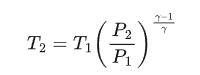
Where T2 is the final absolute temperature, T1 is the initial absolute temperature, P2 and P1 are the final and initial absolute pressures, and γ is the adiabatic index (approximately 1.4 for diatomic oxygen). For example, if a pipe at 20°C ( 293.15K ) and 1 atm is suddenly pressurized with 100 atm of oxygen, the theoretical temperature can soar to:

This localized temperature is more than sufficient to ignite most organic seal materials and surface contaminants.
The second mechanism is particle impact. High-velocity oxygen streams often carry microscopic debris, such as weld spatter, sand, or rust particles. When these particles strike the valve trim or body wall, particularly at elbows or sharp transitions, their kinetic energy is transformed into localized heat. Copper- and nickel-based alloys exhibit superior resistance to this mechanism compared to ferrous metals because they possess higher thermal conductivity and require higher energy levels to ignite.
The third mechanism is mechanical friction, which results from the relative motion between the valve stem and packing, or the plug and guide rings. Improper clearances, high side-loading, or galling can generate enough heat to initiate combustion.
Material Selection and Burn Resistance Hierarchy
In oxygen service, the ranking of materials is based on their resistance to ignition and their rate of reaction. Materials with high ignition temperatures, low heat of combustion, and high thermal conductivity are preferred because they can dissipate heat away from a potential ignition site more effectively. The industry-standard hierarchy for material safety in oxygen systems is generally categorized in the following table:
| Material Category | Ignition Resistance | Rate of Combustion | Application Suitability |
| Copper Alloys (Brass, Bronze) | Highest | Lowest (Self-extinguishing) | Regulators, small valves, high-velocity zones |
| Nickel-Copper Alloys (Monel 400) | Very High | Very Low | Throttling trim, high pressure-drop internals |
| Nickel Alloys (Inconel, Hastelloy) | High | Low | Severe service, high-temperature oxygen |
| Austenitic Stainless (316/304 SS) | Moderate | High (Once ignited) | Standard valve bodies, low-velocity GOX |
| Carbon Steel | Low | Moderate | Low pressure and low velocity pipelines |
| Aluminum / Titanium | Lowest | Extremely High (Explosive) | Generally prohibited in high-pressure GOX |
The Role of Monel 400 and Copper-Based Trim
Monel 400 (a nickel-copper alloy containing approximately 63% nickel and 30% copper) is the engineering benchmark for oxygen control valve trim. It is utilized because copper and nickel have extremely low heats of oxidation and require massive ignition energy. In high-pressure differential applications where oxygen flow approaches sonic velocities, the use of Monel or copper-based alloys is often mandatory to prevent particle impact ignition.
While 316 stainless steel is a versatile material for marine and acidic environments due to its molybdenum content, it remains a moderate-risk material in oxygen service. Stainless steel relies on a passive chromium oxide film for corrosion resistance; however, in high-pressure oxygen, this film does not prevent combustion if an ignition source is present. In fact, stainless steel burns more rapidly than carbon steel once a fire is established.
Non-Metallic Materials and Soft Goods Compatibility
Non-metallic materials such as seals, gaskets, and packing are the weakest link in the kindling chain because they are significantly easier to ignite than metals. In oxygen service, the quantity of non-metals must be minimized, and those used must be evaluated through rigorous testing.
| Test Method | Standard | Purpose |
| Auto-Ignition Temperature (AIT) | ASTM G72 / ISO 21010 | Determines minimum temperature for spontaneous ignition |
| Heat of Combustion | ASTM D240 / D4809 | Measures the amount of energy released during burning |
| Pneumatic Impact Test | ASTM G74 | Simulates adiabatic compression heating on a sample |
| Mechanical Impact Test | ASTM G86 | Evaluates sensitivity to impact in LOX environments |
CGA and EIGA standards dictate that for gaseous oxygen, non-metals must have an AIT of at least 300℃ at the maximum operating pressure, or at least 400℃ with a 100℃ safety margin above the operating temperature. Preferred materials include PTFE (Teflon), PCTFE (Kel-F), and certain fluoroelastomers like FKM (Viton) or Kalrez. Fluorinated lubricants, such as Krytox (halogenated CTFE or PFPE compounds), are the only acceptable greases for oxygen service as they are chemically inert in pure oxygen and do not support combustion. Ordinary petroleum or silicone-based lubricants are strictly prohibited as they react violently with oxygen.
Engineering Design Principles and Velocity Constraints
The design of oxygen service valves must prioritize the minimization of localized heat generation. This is achieved through smooth flow paths, the avoidance of dead spaces where particles can accumulate, and the elimination of impact zones where the oxygen stream strikes a surface at a right angle.
Flow Velocity and Pressure Limits
Standard practice, as defined by CGA G-4.4 and EIGA Doc 13, imposes strict limits on flow velocity based on operating pressure and the material of construction. The rationale is that higher pressures increase the gas density and the kinetic energy of entrained particles ( Ek=1/2mv2 ), making impact-induced ignition more probable.
| Operating Pressure (psig) | Carbon Steel Velocity Limit (ft/s) | Stainless Steel Velocity Limit (ft/s) |
| < 200 | No limit (Non-impingement) | No limit (Non-impingement) |
| 500 | 100 | 100 |
| 1000 | 50 | 50 |
| > 1500 | Not recommended | Not recommended (Upgrade to Monel) |
If a process requires velocities exceeding the limits for stainless steel (typically around 61 m/s or 200 ft/s in non-impingement zones), the valve body or wetted components must be upgraded to velocity-exempt materials such as high-copper or high-nickel alloys which can handle higher kinetic energy without igniting.
Valve Geometry and Impact Zone Avoidance
Traditional valve designs, such as rising stem globe valves or ball valves, present specific risks in oxygen service. Triple offset valves (TOV) are often preferred for isolation because they feature frictionless metal-to-metal torque seating, which eliminates the mechanical friction and rubbing associated with traditional butterfly or ball valves.
Throttling valves represent the most severe service class because they inherently create high velocities and turbulent flow. In these applications, parabolic plugs and attenuation cages made from Monel or other exempt alloys are used to manage the pressure drop safely. Furthermore, check valves are particularly vulnerable because their internals are subject to high-velocity impingement during opening and closing cycles.
Precision Cleaning and Degreasing Standards: ASTM G93
The most critical stage in the manufacturing of oxygen service valves is the absolute removal of hydrocarbon contaminants and particulate matter. This process is commonly referred to as degreasing or cleaning for oxygen service (CFOS). ASTM G93 serves as the primary international guide for cleanliness levels and cleaning methods for equipment in oxygen-enriched environments.
Cleanliness Levels and Surface Residue Requirements
ASTM G93 defines specific cleanliness levels based on the maximum allowable amount of Non-Volatile Residue (NVR) and the size/count of particles remaining on the wetted surface. For industrial valves, Level C is the most common specification.
| Cleanliness Level | NVR Limit (mg/ft²) | Particle Population Criteria |
| Level A | < 1 | Ultra-high purity / Aerospace |
| Level B | < 3 | High-precision instruments |
| Level C | < 6 | Standard Industrial Oxygen Valves |
| Level D | < 20 | Heavy equipment piping |
| Level E | < 50 | Low-pressure / Low-risk systems |
For a valve to meet Level C, the NVR must be less than 66mg/m2 ( 6mg/ft2), and the particle count must be strictly controlled. For example, particles between 175 to 300 microns are limited to a maximum of 20, and any particle greater than 500 microns results in an immediate failure of the cleaning protocol.
The Multi-Stage Degreasing Process
The cleaning process is a specialized subgroup of high-purity chemical processing and must be performed in a designated clean area far from manufacturing units to prevent cross-contamination.
- Disassembly and Pre-cleaning: Valves must be completely disassembled. All components are pre-washed with mineral spirits or alkaline soaps to remove gross oils, grease cuttings, and machining residues.
- Ultrasonic Cleaning: Components are immersed in an ultrasonic agitation tank filled with deionized (DI) water and surfactants. High-frequency sound waves create cavitation bubbles that dislodge microscopic particles from complex internal geometries, such as blind holes and thread roots.
- Rinsing and Intermediate Drying: Parts are rinsed in cascading tanks of DI water until the pH is stabilized. Drying is performed using oil-free nitrogen or filtered, non-lubricated air to ensure no moisture remains to cause oxidation (blush rust) on carbon steel components.
- Verification (The Black Light Test): This is the definitive quality check. Cleaned components are inspected in a dark room under ultraviolet (UV) light (wavelength 320-380 nm). Most hydrocarbon oils and greases fluoresce under UV light. If any phosphorescence is detected, the part must return to the beginning of the cleaning cycle.
- Quantitative Analysis: For critical applications, a solvent wipe or flush test is performed, where the effluent is analyzed for NVR content and particle distribution to certify compliance with the target ASTM level.

_webp.webp "Technical Analysis of Oxygen Service in Fluid Control: Combustion Risk Mitigation, Material Science, and Precision Degreasing Protocols 3")
Clean Room Assembly and Preservation
Following verification, components are moved to a positive-pressure clean room that often exceeds ISO 13485 or IEST-STD-CC1246D standards. Technicians must wear lint-free, anti-static cleanroom suits, hoods, and oil-free latex or plastic gloves.
Only oxygen-compatible lubricants (e.g., Krytox) are applied sparingly to rubbing surfaces. After assembly, the valve is tested for shell and seat integrity using clean, dry, grease-free nitrogen. Once testing is complete, the valve is double-bagged in 4 to 6 mil polyethylene bags, vacuum-sealed with a nitrogen purge, and tagged with a red warning label: “CLEANED FOR OXYGEN SERVICE”.
Operational Protocols and Safety Instrumented Systems
The technical integrity of an oxygen valve is highly dependent on its operational environment. The most significant operational hazard is rapid opening, which induces adiabatic compression heating.
Slow-Opening Counter-Measures
In automated oxygen systems, on-off valves must incorporate a slow-opening function. Unlike standard pneumatic valves that use quick-exhaust solenoids to snap open in milliseconds, oxygen valves utilize throttle valves (speed controllers) on the actuator air supply to ensure a gradual stroke, typically lasting 10 to 20 seconds. This allows any localized heat generated by compression to dissipate through the piping walls before reaching the ignition temperature of the seals.
Upstream Filtration
To mitigate particle impact risks, high-quality filters should be placed upstream of all critical control valves and regulators. These filters must be constructed of non-ferrous, inorganic materials (such as Monel or brass mesh) and require regular cleaning and maintenance to prevent the accumulation of metallic “kindling”.
Personnel Training and Maintenance Rigor
Personnel involved in the installation and maintenance of oxygen systems require specific certification. A common failure mode is the re-contamination of a cleaned valve during installation by workers using oily gloves or non-cleaned tools. If a sealed oxygen valve bag is found to be punctured or damaged upon arrival at a job site, the valve must be considered contaminated and returned for professional re-cleaning.
Industry Landscape and Competitive SEO Strategy
The market for oxygen service valves is defined by high barriers to entry due to the liability and technical expertise required. Major players like Emerson (Fisher, Vanessa, Cash Valve), Flowserve (Valtek, Durco), and Velan dominate the sector by providing not only the hardware but also detailed oxygen hazards and fire risk analysis (OHFRA).
Competitor Content Gap and EEAT Analysis
A deep dive into the digital footprint of these industry giants reveals that while spec sheets and General Arrangement (GA) drawings are widely available, there is a shortage of high-level educational content addressing the 2025 updates to ASTM G93 and the specific challenges of oxygen service in green hydrogen electrolyzers.
| Manufacturer | Core Content Edge | Identified Content Gap |
| Emerson (Fisher) | Control Valve Handbook (5th Ed) and material bulletins | Detailed case studies on LOX fire forensic analysis |
| Flowserve | Safety Awareness Bulletins and OVET services | Multi-language cleaning certification tutorials |
| Velan | High-temperature (>200°C) oxygen service data | Interactive velocity limit calculators for engineers |
Technical Keyword Mining for B2B Procurement
In the industrial valve sector, search intent is driven by engineers and safety managers looking for compliance with specific standards. Effective SEO for this niche requires targeting long-tail, high-intent technical keywords.
High-Priority Technical Keyword Clusters:
- Compliance-Driven: “ASTM G93 Level C degreasing service,” “CGA G-4.1 vs ASTM G93,” “EIGA Doc 13 velocity limits.”
- Material-Specific: “Monel 400 trim for oxygen control,” “Krytox grease for oxygen valves,” “AIT testing for valve seats.”
- Application-Specific: “LOX valves for air separation units,” “Adiabatic compression prevention in GOX,” “Frictionless isolation valves for oxygen.”
Manufacturers that prioritize Experience, Expertise, Authoritativeness, and Trustworthiness (EEAT) by publishing detailed whitepapers on the physics of the kindling chain or providing transparency regarding their cleanroom ISO ratings will capture higher-quality leads than those relying on generic marketing language.
Summary of Industrial Best Practices
The management of combustion risk in oxygen service is a multidisciplinary effort that integrates thermodynamics, metallurgy, and surface chemistry. The transition of common metals from structural materials to high-calorific fuels under oxygen pressure necessitates a paradigm shift in valve procurement and operation.
- Eliminate the Fuel: Strictly adhere to ASTM G93 degreasing protocols to remove hydrocarbon “kindling.”
- Upgrade the Metallurgy: Use Monel 400 or copper alloys for high-velocity and high-pressure-drop zones where stainless steel is prone to ignition.
- Control the Kinetics: Maintain flow velocities within the safe boundaries of CGA G-4.4 to prevent particle impact.
- Mitigate the Heat: Implement slow-opening actuators to neutralize the threat of adiabatic compression.
- Maintain Integrity: Use only certified oxygen-compatible soft goods (PTFE/FKM) and fluorinated lubricants (Krytox).
As the global energy sector pivots toward the production of green oxygen and hydrogen via large-scale electrolysis, the demand for safe, reliable, and meticulously cleaned fluid control solutions will continue to escalate. The convergence of deep technical engineering and transparent safety documentation remains the primary defense against the catastrophic potential of metal fires in oxygen-enriched environments.