In modern industrial fluid control systems, valve selection is not merely a matter of opening or closing a line; it is a critical engineering decision that affects process stability, safety, and energy efficiency. As an SFAN engineer with 15 years of industry experience, I have observed that the choice between a Globe Valve and a Ball Valve remains a primary point of debate during the design phase. While globe valves are renowned for their superior throttling and regulation capabilities, ball valves dominate pipeline transport due to their minimal pressure drop and rapid shut-off performance. This report provides a comprehensive technical analysis across mechanical structure, international standards, hydraulic performance, and Total Cost of Ownership (TCO), integrating the manufacturing expertise of SFANVALVE in compliance with API 6D, API 623, and other global benchmarks.
1. Mechanical Structure and Operational Principles: Globe Valve vs. Ball Valve
The fundamental difference between globe and ball valves lies in their closure mechanisms and flow path geometry, which dictates their performance in specific industrial environments.
Globe Valve: Linear Displacement and Throttling Control
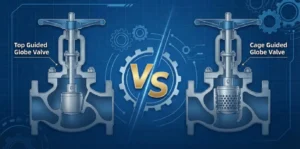
A globe valve is a linear-motion valve designed to start, stop, and regulate flow. It features a disc (or plug) that moves perpendicular to the seat. To achieve a full seal, the handwheel must be turned multiple times, making the operation slower but providing a high degree of control over the flow rate.
The internal structure forces the fluid to change direction multiple times—typically in an “S” or “Z” shaped path. While this creates significant resistance, it allows for highly precise adjustment of the gap between the plug and seat, making it the industry standard for precision throttling.
Ball Valve: Rotary Motion and Straight-Through Flow
A ball valve is a quarter-turn (90-degree) rotary valve that uses a hollow, perforated ball to control flow. When the bore is aligned with the pipe, the valve is fully open; a 90-degree rotation stops the flow entirely.
The hallmark of the ball valve is its straight-through flow path. In a full-bore design, the internal diameter of the ball matches the pipe, resulting in nearly zero flow resistance. This makes it the ideal choice for quick shut-off and high-flow applications where energy conservation is prioritized.
| Feature | Globe Valve | Ball Valve |
| Operation | Multi-turn / Linear | Quarter-turn / Rotary |
| Flow Path | S-shaped / Tortuous | Straight-through |
| Primary Function | Throttling & Regulation | Isolation & Quick Shut-off |
| Actuation Speed | Slower / More stable | Fast / Rapid response |
| Directionality | Unidirectional (Low-in, High-out) | Typically Bidirectional |
Data synthesized from.
2. International Standards and Compliance Frameworks
Compliance with international standards ensures mechanical integrity in extreme conditions for Globe Valve vs. Ball Valve. SFANVALVE products are engineered and tested to meet the most rigorous global specifications.
API 623: The Modern Standard for High-Performance Globe Valves
Historically, globe valves followed BS 1873, but the newer API 623 standard has become the “Gold Standard” for heavy-duty refinery service. API 623 introduces stricter requirements for stem diameters, seat hardfacing (typically Stellite 6), and fugitive emission controls. SFANVALVE’s API 623 globe valves often feature guided discs to eliminate vibration during high-velocity throttling.
API 608 vs. API 6D: Ball Valve Applications
Ball valves are governed by two distinct standards depending on the application:
- API 608: Covers metal ball valves for industrial process piping (refineries, chemical plants). It emphasizes fire safety (API 607), anti-static design, and blowout-proof stems.
- API 6D: The “Bible” for pipeline valves used in midstream transportation. It specifies requirements for full-bore configurations, Double-Block-and-Bleed (DBB) functionality, and pigging capabilities.
API 598: Universal Testing Criteria
Regardless of type, nearly all industrial valves must pass API 598 testing before shipment. This includes high-pressure hydrostatic shell tests and low-pressure seat leakage tests to verify structural and sealing integrity.
3. Hydraulic Performance and Flow Dynamics
The hydraulic efficiency of a valve is quantified by its Flow Coefficient (Cv).
Flow Coefficient (Cv) and Pressure Drop
The Cv value is defined as the volume of water (in US gallons) that will flow through a valve with a 1 psi pressure drop at 60°F. The general formula for Cv is:

Where Q is the flow rate, SG is the specific gravity, and ΔP is the pressure drop.
Ball valves offer a significantly higher Cv than globe valves of the same size. For instance, a 2-inch full-bore ball valve may have a Cv of approximately 160, whereas a 2-inch globe valve typically averages around 55. This means globe valves create 3–5 times higher pressure drop, which translates to increased pump energy consumption over time.
Cavitation and Erosion Risks
While globe valves have higher pressure drops, they handle cavitation better than standard ball valves. In a globe valve, the pressure recovery is more gradual. Conversely, a partially open ball valve creates high-velocity “vena contracta” points where the pressure drops below the vapor pressure, leading to cavitation bubbles that can erode the ball and seats.
4. Throttling Precision and Automation
Globe Valves: The Precision Tool
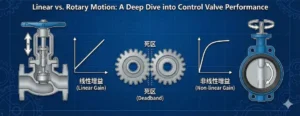
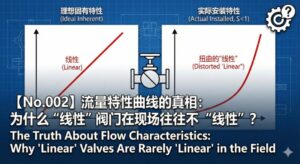
Globe valves provide an approximately linear relationship between the valve opening and the flow rate. This stability makes them ideal for PID control loops where accurate modulation (±2% accuracy) is required, such as in boiler feedwater systems or chemical dosing.
V-Port Ball Valves: A Throttling Hybrid
Standard ball valves are poor at throttling because flow increases exponentially during the first degrees of opening. However, V-port ball valves (V-notch) use a specialized V-shaped ball to create an “equal percentage” flow characteristic. SFANVALVE provides V-port ball valves that offer a compromise between the high Cv of a ball valve and the control of a globe valve, particularly for slurry or high-viscosity media.
5. Material Selection and Service Life
At SFANVALVE, we select materials based on the fluid’s corrosivity, temperature, and pressure.
- ASTM A216 WCB: The standard carbon steel for high-temperature service up to 425°C.
- ASTM A351 CF8M: 316 stainless steel, offering superior corrosion resistance for chemical processing and acidic media.
- Hardfacing (Trim 5/12/16): For globe valves in steam service, we utilize Stellite 6 hardfacing on the seat and disc to prevent “wire-drawing” erosion caused by high-velocity steam.
6. Total Cost of Ownership (TCO) and Maintenance
Energy vs. Maintenance
Ball valves are more energy-efficient due to their low flow resistance, potentially saving thousands in electricity costs for large pipeline operations. However, globe valves offer better in-line maintainability. The bonnet and internals of a globe valve can often be accessed for seat lapping without removing the valve body from the pipeline.
ESG and Fugitive Emissions
Environmental compliance is now mandatory. SFANVALVE integrates API 624 certified graphite packing for globe valves and API 641 certified sealing for ball valves to ensure fugitive emissions remain below 100 ppm.
7. Engineering Selection Checklist for B2B Procurement
When reviewing General Arrangement (GA) drawings or requesting quotes, engineers should verify:
- Face-to-Face Dimensions: Must comply with ASME B16.10 to ensure interchangeability.
- Actuator Interface: Must follow ISO 5211 for seamless automation.
- Documentation: Every valve must include a Mill Test Report (MTR) per EN 10204 3.1, documenting chemical composition and mechanical properties.
Conclusion
The “Globe Valve vs. Ball Valve” decision is application-dependent. Use a Globe Valve for precise throttling, high-pressure steam, and systems requiring frequent modulation. Use a Ball Valve for isolation, emergency shut-off, and high-flow pipelines where energy efficiency and zero-leakage are paramount.
By choosing SFANVALVE, you are not just purchasing a component; you are gaining 15 years of engineering expertise and a commitment to global standards like API 6D and API 623. Our team provides full technical support, from Cv calculations to material compatibility analysis, ensuring your fluid control system operates with logical closure and industrial-grade reliability.